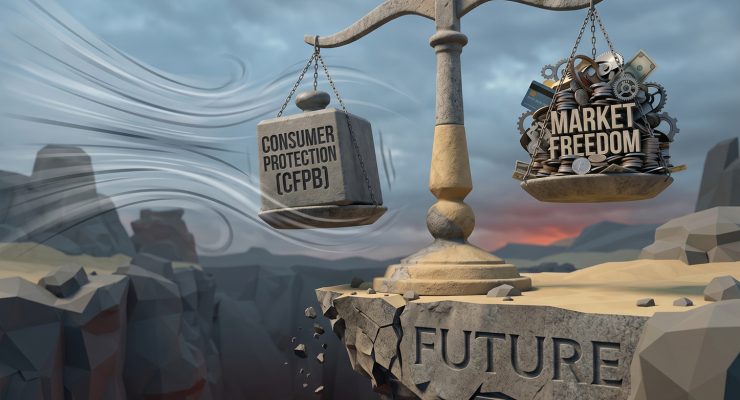
The Consumer Financial Protection Bureau was not created in a vacuum. It was built in the rubble.
Founded in 2011 under the Dodd-Frank Wall Street Reform and Consumer Protection Act, the bureau emerged from the wreckage of the 2008 financial crisis, when millions of Americans discovered that the mortgages they had signed were designed to fail them. Elizabeth Warren, then a Harvard law professor, conceived the agency as a dedicated watchdog positioned between ordinary citizens and the financial industry. Its mandate stretched across mortgages, student loans, auto loans, credit cards, deposit accounts, peer-to-peer payment networks, and digital banking applications. CFPB consumer protection, stated plainly, is the project of ensuring that financial markets work fairly, transparently, and competitively. In 2026, that project faces the most serious institutional threat since the bureau’s founding.
What Is the CFPB and Why Does It Matter?
The Origins of the Consumer Financial Protection Bureau
The bureau was an explicit response to institutional failure. Before the 2008 crisis, consumer protection responsibilities were scattered across seven federal agencies, none with a dedicated mandate to serve ordinary borrowers. The Dodd-Frank Act consolidated that authority into a single body designed with structural independence: its funding flowed from the Federal Reserve’s net earnings rather than annual congressional appropriations, insulating it from budget battles driven by hostile political majorities. That design was deliberate. It later became the agency’s most contested feature.
The CFPB’s Core Responsibilities
The bureau holds direct supervisory authority over depository institutions (banks and credit unions) with assets exceeding $10 billion and independently monitors nonbank entities regardless of size: payday lenders, private student loan providers, and mortgage brokers. Debt collectors, the three major credit reporting agencies, and fintech firms offering “Buy Now, Pay Later” products fall within its jurisdiction. Its public consumer complaint database routes millions of actionable disputes to companies each year. It can subpoena corporate records, conduct field audits, file civil lawsuits, and demand restitution or civil penalties.
Two landmark rules illustrate the agency’s practical reach. The Ability-to-Repay and Qualified Mortgage Rule required lenders to verify a borrower’s actual income before extending a home loan. The “Know Before You Owe” disclosure reform consolidated confusing real estate closing documents into two standardised forms prospective homebuyers could actually read. Both changed the daily experience of buying a home in America.
How CFPB Rulemaking Shapes Financial Products
The bureau’s rulemaking follows a structured process: it researches market data, issues a Notice of Proposed Rulemaking, collects public and industry comment, then publishes a legally binding Final Rule. For consumers, the consequences are direct. Standardised loan forms prevent predatory lenders from burying interest rates or structural risks in fine print. Penalty caps reduce the cost of credit for borrowers who live paycheck to paycheck.
Compliance carries real costs for institutions. Banks and nonbank lenders must retool internal software, retrain staff, and audit operations to match changing mandates. Non-compliance exposes firms to regulatory fines, mandatory restitution funds, and class-action litigation. The compliance burden has always been part of the bureau’s deterrent architecture.
The CFPB Credit Card Late Fee Rule and Why It Became Controversial
In early 2024 the bureau finalised a rule that would have cut the safe-harbour cap on credit card late fees from roughly $32 to a flat $8 for major card issuers. Consumer advocates argued the change was overdue: late fees disproportionately penalise low-income households and families of colour, and an $8 cap accurately reflects the minor administrative cost that banks actually incur when a payment arrives marginally late.
The financial industry pushed back hard. Banks argued that a flat $8 cap would fail to deter late payment behaviour and force lenders to tighten credit criteria, reducing access for borrowers with thin credit files. On-time payers, they warned, would face higher annual fees and reduced rewards as institutions sought to recoup lost penalty revenues. The fight moved to federal court in Texas. In April 2025, a judge vacated the rule following a mutual legal settlement, preserving traditional fee structures. It was a significant reversal for the bureau, and a preview of the institutional pressures still to come.
Why the CFPB Faced Major Legal Challenges in 2024-2025
The Funding Structure Under Attack
The late fee dispute was a sideshow compared to the broader constitutional attack on the bureau’s existence. Corporate opponents argued that drawing money from the Federal Reserve instead of annual congressional appropriations violated the Constitution’s Appropriations Clause. If courts agreed, the bureau’s rules, penalties, and enforcement actions since 2011 could be voided retroactively. The architects of Dodd-Frank had designed the funding structure deliberately, to prevent hostile congressional majorities from starving the watchdog into irrelevance.
Key Court Outcomes
The Supreme Court resolved the core question in May 2024. In a 7-to-2 ruling in CFPB v. Community Financial Services Association of America, the Court validated the bureau’s funding structure and averted an immediate systemic shutdown. Yet the ruling did not end the pressure. Subsequent challenges shifted focus to the bureau’s internal management structure and personnel appointments, forcing settlements and pausing enforcement actions. Courts are also increasingly applying the “major questions” doctrine, requiring explicit congressional approval for sweeping regulatory actions. Each new ruling narrows what future administrations can accomplish with the bureau, regardless of their preferences.
Budget Cuts and Political Pressure: Can the CFPB Maintain Its Effectiveness?
How the Funding Crisis Developed
The bureau’s funding is tied by statute to quarterly transfers from the Federal Reserve’s combined net earnings, capped at a fixed percentage of the Fed’s operational expenses. Since 2022, rising interest rates inflated the cost of the Fed’s own liabilities, pushing it into an operating loss. The Department of Justice issued a legal opinion in 2025 arguing that because no “earnings” exist, no transfer can legally occur. The bureau entered a severe funding crisis with operational reserves depleted and an impending freeze governed by the Antideficiency Act, which prohibits non-essential federal staff from working without appropriated funds.
What Contraction Looks Like in Practice
Active field audits fell. Hiring of experienced enforcement attorneys stopped. Investigative backlogs accumulated. Complex litigation against predatory fintech networks and major multi-state mortgage servicers slowed first; routine supervision of smaller regional lenders and subprime auto financiers was scaled back to skeleton-crew operations. The bureau did not disappear. It shrank, and the gap it left behind widened faster than any state regulator could close it.
Consumer Protections Potentially at Risk
The consequences for ordinary borrowers are not abstract. Rollbacks on rulemaking leave checking account holders exposed to escalating overdraft fees and bounced-check penalties. Hidden administrative charges on retail deposit accounts, restrained since the mid-2010s, are positioned to return across major commercial banks. In mortgage markets, reduced supervision raises the risk of predatory loan churning, deceptive modification schemes, and undisclosed closing costs. Homebuyers lose an active federal ally to challenge discriminatory appraisal practices in low-income postal codes.
Credit bureau oversight weakens in parallel. Lighter federal pressure on the three major agencies extends dispute resolution timelines and reduces the cost to bureaus of responding inadequately to consumer error complaints. In debt collection, reduced federal enforcement invites a return to high-frequency calling tactics and the revival of claims on debts past their enforceable limitations period. The bureau’s public complaint portal, already under budget pressure, may slow further, giving companies less incentive to respond meaningfully to consumer grievances.
What a Weaker CFPB Could Mean for Financial Institutions
Banks and nonbank lenders operating under a lighter federal footprint face fewer comprehensive field examinations, which lowers compliance overhead and allows more latitude on product design and asset structuring. Legal defence budgets shift from defending large federal enforcement actions to managing scattered state-level friction. For compliance departments, there is genuine short-term relief.
Yet the relief is partial. Without clear federal standards, firms face elevated exposure to private class-action lawsuits over novel financial products. Companies that push product boundaries too aggressively, particularly in areas affecting vulnerable borrowers, create reputational risks that markets eventually price in. Regulatory certainty, even when burdensome, carries economic value; institutions that benefited most from the bureau’s existence may yet discover that its absence costs more than its presence did.
Could States Replace CFPB Enforcement?
Some will try. Democratic state attorneys general have already formed multi-state coalitions to investigate predatory lending and credit reporting abuses, stepping into the space vacated by a retreating federal agency. State mini-FTC acts and dedicated financial statutes frequently grant local authorities enforcement powers that match or exceed federal mandates, and state legislatures can respond to emerging threats faster than federal rulemaking allows.
But state enforcement is structurally limited. A borrower in California or New York benefits from aggressive state oversight; a borrower in a less proactive state does not. The federal floor exists precisely because state ceilings vary. Removing the floor does not raise all ceilings. Multistate businesses may also exploit the patchwork by domiciling operations in permissive jurisdictions, a dynamic that uniform federal oversight was specifically designed to prevent.
The Future of Consumer Financial Protection in the United States
Several scenarios are plausible. A decentralised model concentrates enforcement in activist states while leaving borrowers elsewhere to rely on private litigation. Legislative restructuring would place the bureau under a multi-member commission funded through traditional congressional appropriations, trading structural autonomy for democratic accountability. A third path is institutional persistence at reduced capacity until a future administration rebuilds the enforcement posture.
The rapid growth of AI-driven credit underwriting, algorithmic lending decisions, and crypto-adjacent banking products presents challenges that even a fully funded bureau would struggle to address quickly. Unregulated peer-to-peer advance apps and short-term pay tools routinely bypass existing banking definitions. Those products will continue to grow regardless of the bureau’s operational status; the question is whether any federal authority keeps pace with them.
Experts expect a sustained lull in new federal rulemakings, a rise in multi-state enforcement coalitions, and an increase in private class-action filings. Financial institutions will navigate structural uncertainty as the bureau reorganises its funding model and strategic priorities under whatever legal and political conditions emerge over the next several years.
What Consumers Should Do if CFPB Protections Change
Reviewing state-specific consumer protection statutes is a practical first step. They frequently offer protections that exceed federal minimums, particularly in states with aggressive attorney general offices. The core provisions of the Truth in Lending Act and the Fair Debt Collection Practices Act remain in force regardless of the bureau’s operational status. Pulling credit reports regularly through standard federal access points catches identity theft and reporting errors before they compound. Automated alerts on checking and savings accounts flag unauthorised transactions and creeping maintenance fees.
On borrowing, reading loan disclosure documents in full matters more when federal oversight of originators is reduced: mandatory arbitration clauses and pre-payment penalties deserve particular scrutiny. Comparing Annual Percentage Rates rather than monthly payment amounts prevents the low-payment trap common in subprime auto lending. When problems arise, filing formal complaints with the Federal Trade Commission or state banking departments preserves a record. Non-profit credit counselling organisations accredited by the National Foundation for Credit Counseling remain a resource for debt management and workout agreements.
For consumers trying to understand how this regulatory moment fits a broader pattern of financial reform, the concurrent restructuring of bank capital requirements offers useful comparative context. The industry resistance the CFPB faces closely mirrors the dynamics explored in Basel III Is Being Rewritten. Bank Investors Will Feel It First., where tightening rules on large institutions generated comparable pushback and comparable uncertainty for ordinary borrowers.
Why CFPB Consumer Protection Matters to Every Borrower
CFPB consumer protection is not a regulatory abstraction. It is the late fee that stayed at $32 rather than climbing to $60. It is the mortgage disclosure that let a first-time buyer understand what they were actually signing. It is the disputed collection account removed from a credit file without requiring a lawyer.
The bureau directly influences the transparent pricing, fee limits, and practical safety of the financial products that most Americans use every day. Its structural foundations are under simultaneous pressure from a funding mechanism challenged by a novel legal interpretation of Federal Reserve losses, an executive structure reshaped by political appointees, and a court environment increasingly sceptical of broad administrative power. Whether Congress stabilises the bureau, allows it to contract, or restructures it entirely, the outcome will determine the baseline conditions under which American consumers borrow, save, and dispute errors for the next decade.
What to watch: how Congress handles the Federal Reserve funding dispute, and whether multi-state enforcement coalitions led by state attorneys general can absorb the caseload that a reduced federal agency can no longer carry. The answer, judging by available resources, is almost certainly no. But consumers who understand the gap can at least see it coming.