The “risk-free” label attached to U.S. Treasury bonds describes one kind of risk only: the probability that the borrower will default. It has never described what happens to the market price of those bonds when interest rates move. That distinction, comfortably ignorable during four decades of declining yields, is now the most consequential variable in fixed income.
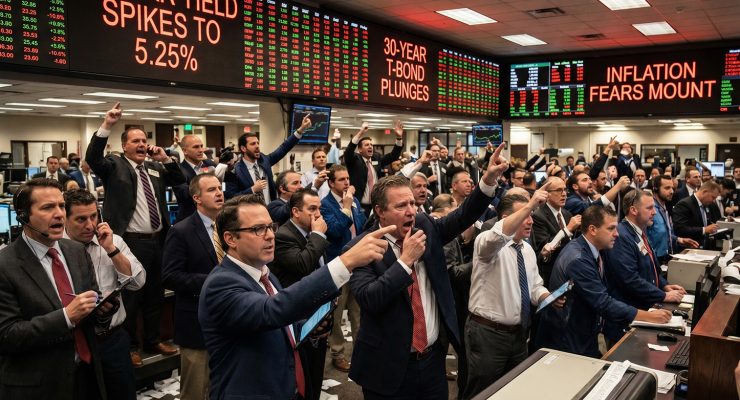
Long-term Treasury yields have surged as the Federal Reserve’s extended tightening cycle collides with persistent inflation and a bond market reconsidering the assumptions it had carried since the early 1980s. When yields rise, bond prices fall; when yields rise sharply and unexpectedly, the losses on long-duration government debt can rival those of considerably riskier assets. Investors who positioned themselves in 30-year Treasuries as a safety measure have, in some stretches, watched those positions decline in value by double digits. The default risk remains near zero. The price risk was never part of the label.
A Distinction That Four Decades Made Easy to Ignore
The conflation of “government bond” with “safe” was understandable for most of the period from the early 1980s through 2021. Yields fell, in long trend, from above 15% to near zero. In a falling-rate environment, holding long-duration bonds is rewarding: prices rise as yields decline, and the “risk-free” reputation of the issuer converts into a reliably appreciating asset class. Investors were not wrong to call Treasuries safe during this period. They were simply being rewarded for a regime that obscured duration risk rather than eliminating it.
That regime has ended. The Federal Reserve’s pivot to aggressive tightening beginning in 2022, and the subsequent repricing of the neutral rate across the yield curve, has reintroduced a variable that a generation of bond investors had not needed to manage actively. Duration, the sensitivity of a bond’s price to changes in interest rates, has become the dominant risk factor in a portfolio that until recently required little active management at all.
Duration as the Central Risk Variable
Duration risk is not exotic. A bond with a duration of 10 years will decline approximately 10% in price for every one-percentage-point rise in its yield. For 30-year Treasury bonds, duration can exceed 20 years, meaning a 150 basis-point move in yields, the kind of move that has occurred multiple times since 2022, translates into a price loss of more than 30%. The bondholder receives face value at maturity; but for investors with shorter time horizons, or those managing against mark-to-market benchmarks, these interim losses are material.
This is the mechanism that the “risk-free” label was never designed to cover. Credit analysts have always drawn a clean line between default risk and market risk. The investing public, primed by decades of both being absent from Treasury bonds simultaneously, had grown accustomed to treating the two as the same thing.
Where Investors Are Looking Instead
The search for better risk-adjusted returns is pulling capital toward several alternatives. Short-duration instruments, including Treasury bills, short-dated notes, and floating-rate securities, allow investors to capture elevated yields without accepting the price sensitivity of longer maturities. Money market funds have absorbed substantial inflows as investors favour yield over duration exposure.
Corporate credit, particularly investment-grade bonds with maturities in the two-to-five-year range, offers a spread above Treasury yields that compensates for marginal increases in credit risk while keeping duration manageable. Some institutional investors have moved further out on the risk spectrum, toward high-yield debt or emerging-market sovereign bonds denominated in local currencies, though these carry risks that Treasury holdings categorically do not.
Selection, Not Safety, Is the New Standard
The practical implication for bond investors is that passive holding of government debt is no longer a self-evidently conservative strategy. What matters now is duration selection: the choice of where on the yield curve to sit, and how much price sensitivity to accept in exchange for yield. A three-month Treasury bill and a 30-year Treasury bond are both “risk-free” in the credit sense. Their behaviour over the next 12 months, should yields continue to move, has almost nothing in common.
This is not a novel insight. It is a lesson that bond markets in every rate cycle eventually deliver. The novelty is how thoroughly the previous 40 years had allowed investors to set the lesson aside.
The “risk-free” designation was always a narrower claim than it appeared. Rising yields have not undermined Treasuries; they have simply clarified what the label was promising all along. For investors who believed the promise was broader, the current environment is an expensive education in the difference between a sovereign guarantee and a stable price.
■